

Catch unhelpful thoughts and reframe them
Learn tools from cognitive behavioral therapy that help you notice a thought, test it against the facts and choose a more accurate one.



What you learn in Reframing
You learn the step between what happens and how you feel, how to spot catastrophising and mind reading, and how to fill in a thought record. Later topics cover behavioral activation, the 10-10-10 rule and choosing the right tool for the moment.
 Antecedent-Belief-Consequence Model
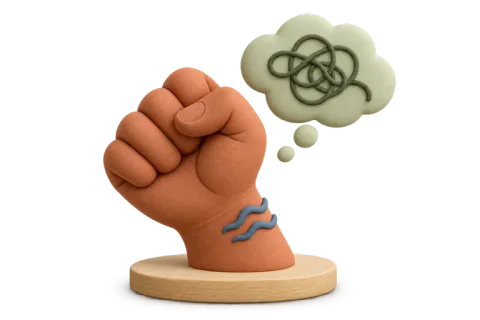 Catching Thoughts Through the Body
 Identifying All-or-Nothing Thinking
 Catastrophising & Probability Estimation
 Mind Reading & Personalisation
 Thought Record
 Cognitive Restructuring
 Behavioral Activation
 10-10-10 Rule
 Building Your Thought Toolkit
Learn it, check it, then try it
Each topic follows the same three steps, so what you learn ends up in your day.
- LessonOne useful idea, explained in a few short screens
- QuizA few questions to check what stuck
- PracticeA small step to try in your own day
Example: the Thought Record topic ends with a practice called Thought Record.
Questions, answered
See all FAQsIs this the same as CBT therapy?
LeWell teaches self-help skills based on cognitive behavioral therapy. It is not therapy and does not replace a therapist. If your thoughts feel overwhelming, please reach out to a professional.
How does reframing help day to day?
When a thought like "I always mess this up" shows up, you learn to check it against the facts and write a more accurate version. Practices like the Probability Check make that a habit.
Is LeWell free?
LeWell is free to download. Access to content and any purchase options can vary by account. The app shows the price and renewal terms before you buy.




Begin with Reframing today